


Introduction
An IRS envelope lands in the mailbox and your heart beats faster and stomach drops. Take a breath: knowing what to do when the IRS audits your farm turns a frightening letter into a manageable process. Most farm audits are not accusations of fraud, they’re requests to verify the correctness what you reported, and growers with clean records usually come through audits fine.
Farms draw a specific kind of scrutiny. Schedule F losses, large equipment deductions, and the perennial question of whether an operation is a real business or a lifestyle write-off all put agricultural returns under a brighter light than most. The good news is that the outcome is largely decided *before* the letter arrives, by how you kept your books and documented your intent.
This guide walks through the types of farm audit, the issues examiners focus on, exactly how to respond to your attorney or CPA, and when to bring in professional representation. Handle it professionally and methodically and most audits resolve with little or no change.
First: Don’t Panic, and Read Carefully
The single worst response to an audit letter is a rushed or emotional one. Just like in the movies, don’t write or say anything as you have by law the right to representation. If you try to clal the IRS and answer their questions then you could spoil the soup and invite a whole lot of trouble, let the professionals handle it. Start by understanding what kind of audit you’re actually facing, because the three types differ enormously in scope.
A correspondence audit is the most common and least alarming, a letter asking you to mail in receipts, records, or an explanation for specific items. You typically have about 30 days to respond, and extensions are usually available if you ask. An office audit asks you to bring records to an IRS office for an in-person review. A field audit is the most in-depth: an examiner may visit the farm itself. Each is more involved than the last, but all are manageable with good records.
Read the notice slowly. Identify exactly which items and which tax years are in question, and what documents the IRS wants. Then call the professionals the attorney or the CPA let them do all of the responding on time, provide exactly what’s asked and nothing more, and keep your answers factual. Volunteering extra information or extra years only widens the examination. The tone to aim for is calm, organized, and cooperative.
The Question Behind Most Farm Audits: Business or Hobby?
For farms reporting losses, one issue looms over everything else: whether the IRS considers your operation engaged in for profit under Section 183, the hobby-loss rules. If it decides your farm is a hobby, the consequences are severe: you report all your income but may lose the ability to deduct your losses against other income.
The IRS applies a nine-factor test from the regulations, and no single factor controls. Examiners weigh whether you run the operation in a businesslike manner (books, records, a separate bank account), your expertise and use of advisors, the time and effort you put in, whether your assets can appreciate, your history of income and losses, the reasons for those losses, and the elements of personal pleasure involved. It’s a big-picture judgment about intent.
There’s also a safe harbor: an activity that shows a profit in three of five consecutive years is presumed to be for profit (two of seven for horse operations). But it’s a presumption, not a hard rule — and it cuts both ways. Farmers in a genuine stretch of losses aren’t automatically hobbyists, especially when weather, market conditions, or a start-up phase explain the red ink. What wins these cases is evidence that you operate like a business trying to make money. Canberra Company has won 25 hobby loss challenges against the IRS.
The Records That Win — and the Ones That Don’t
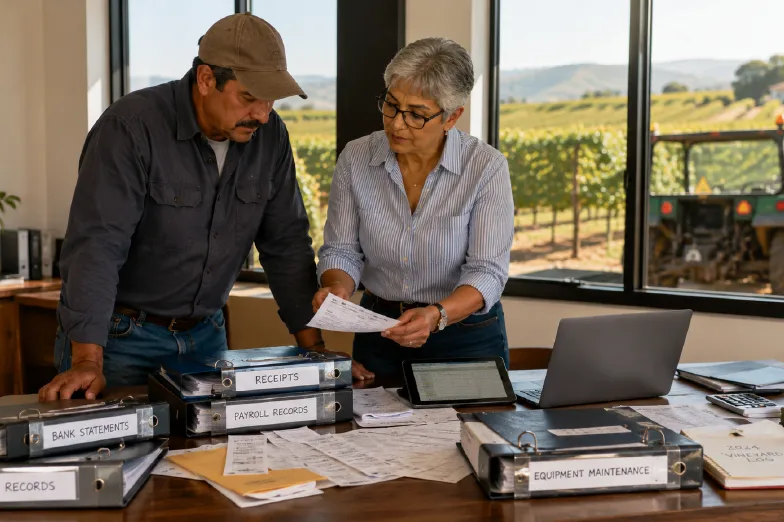
Audits are won and lost on documentation, and not all documentation is equal. The distinction examiners care about most is contemporaneous versus reconstructed.
Records created at the time, dated receipts, invoices, bank and credit card statements, mileage logs kept as you drove, payroll records, carry real weight. Records assembled *after* the audit notice arrives are treated with skepticism and often don’t survive examination. A mileage log reconstructed from memory rarely holds up; one kept in real time is nearly bulletproof. The lesson is to build your records now, not when you need them.
For a farm, the documentation that matters includes: a separate business bank account and clean books, receipts and invoices for every deduction, payroll records for farm labor, crop insurance settlement sheets showing the type and purpose of any payout, and, critically for the hobby-loss question, a written business plan and a paper trail showing steps you’ve taken toward profitability. Keep records at least three years, and six is safer given the longer statute for some items. Basis records for land and depreciable assets should be kept until years after you dispose of them.
A Deeper Look: How Returns Get Selected and How Far the IRS Can Reach
Understanding *why* your return was picked helps you respond well, it is only fair that the auditor tell why the return was selected for examination. and helps you in future years. Audits are sometimes mysterious maybe it was the ex-wife, the disgruntled employee or Somone else that tipped the IRS off.
Most returns are flagged by the DIF score (Discriminant Function System), an algorithm that compares your return against statistical norms for farms of similar size, income, and location. A return that deviates sharply; outsized deductions relative to income, recurring losses, unusually round numbers, scores higher and is more likely to be pulled. Separately, the Automated Under reporter program matches your return against every 1099, W-2, and K-1 filed under your name; a mismatch generates a CP2000 notice, which is a proposed adjustment rather than a full audit. Knowing which you’ve received changes how you provide a measured response. Note also that IRS is testing several AI methods of comparing farms based on geographic area and levels of income.
Two boundaries are worth being aware of. First, the statute of limitations: the IRS generally has three years to audit a return, extended to six years if you omitted a substantial amount of income, with no limit in cases of fraud or a return never filed. Second, a protective rule — under IRC §7605(b), the IRS is restricted from auditing the *same tax year* twice without justification. There are also rules about repetitive audits where they come back year after year to do another audit. From the beginning and throughout, you have the right to professional representation: a tax attorney or CPA with a strong tax background can deal with the examiner on your behalf so you don’t face them alone. If the audit produces a result you disagree with, you can take it to IRS Appeals, and beyond that to the US Tax Court, though the vast majority of farm audits never get close to that and are usually settled.
Practical Tips: Handling a Farm Audit—-Call your CPA
- Respond by the deadline. Correspondence audits usually give you about 30 days. If you need more time, request an extension in writing rather than going silent.
- Answer only what’s asked. Provide the specific documents for the specific items and years named. Don’t volunteer extra records, extra years, or explanations you weren’t asked for. Always let your professionals handle all communications written or any other type of response.
- Organize before you send. Match each questioned deduction to its receipts, invoices, and bank entries. A clean, labeled package signals a businesslike operation on its own.
- Never fabricate or backdate records. Reconstructed logs are weak and backdated documents are dangerous. Work with what you genuinely have and explain any gaps honestly.
- Document your profit motive. On day 1 of operations, for any hobby-loss question, assemble your business plan, expertise, advisor relationships, and the steps you’ve taken to reach profitability, including how weather or markets caused specific losses.
- Get representation for anything even a simple letter. For an office or field audit, or any hobby-loss challenge, a CPA, , or tax attorney should handle the examiner. You don’t have to face it yourself. If the IRS calls you on the phone be nice, say nothing and politely ask them to call your representative and tell the representative what kind of contact the IRS attempted.
- Know your appeal rights. If you disagree with the audit result, you can go to IRS Appeals and, if needed, Tax Court. An experienced specialist can tell you whether your position is worth pressing.
Conclusion
A farm audit is a documentation contest, not a verdict. Most begin as a routine letter, most turn on records rather than intent, and most resolve with little change when the grower is prepared. The two things that decide the outcome, clean, contemporaneous records and a demonstrable profit motive, are both built long before any envelope arrives, which is exactly why the best audit defense is how you keep your books every single day.
If you’re facing a notice right now, don’t panic, read it carefully, respond on time with exactly what’s requested, and get representation. An agricultural tax specialist who has stood between growers and the IRS before can often resolve an audit faster and cleaner than you can alone, and can make sure the same issue doesn’t come back next year.
Frequently Asked Questions
Q: What triggers an IRS audit of a farm?
A: Common triggers include Schedule F losses reported over several years, large equipment or vehicle deductions, deductions that are unusually large relative to income, and income that doesn’t match filed 1099s. Returns are largely selected by the IRS’s DIF scoring system, which flags returns that deviate from statistical norms for similar farms.
Q: What happens if the IRS says my farm is a hobby?
A: If your farm is classified as a hobby under Section 183, you must report all of your farm income but cannot deduct your losses against other income. Under current law, most of those expenses become non-deductible. The IRS decides using a nine-factor test that weighs whether you operate like a genuine, profit-seeking business.
Q: How many years does a farm need to be profitable to avoid hobby status?
A: The safe harbor presumes a farm is for-profit if it shows a profit in three of five consecutive years (two of seven for horse operations). But this is a presumption, not a hard rule. Farms in a legitimate stretch of losses due to weather, markets, or start-up costs can still qualify as businesses with proper documentation.
Q: What records do I need for a farm audit?
A: You need contemporaneous records: a separate business bank account, dated receipts and invoices, mileage and equipment logs kept in real time, payroll records, crop insurance settlement sheets, and for hobby-loss questions a written business plan showing your profit motive. Keep records at least three years, and six is safer. It’s a look before you leap situation. Know the hobby loss challenge on day 1 of operations.
Q: How long does the IRS have to audit my farm return?
A: Generally three years from filing. That extends to six years if you substantially understated income, and there is no time limit in cases of fraud or an unfiled return. The IRS is also restricted from auditing the same tax year twice without justification under IRC §7605(b).