

Introduction
Passing down a farm is not a single event , it’s a transition that can take a decade or more to do well. Bringing the next generation into the family farm means gradually shifting ownership, responsibility, and income to a son or daughter while the founding generation is still around to guide it. Done thoughtfully, it keeps the farm intact and the family whole. Done as an afterthought, or not at all, it’s how farms get sold and families fall out. The concept of letting the new executives (the children) fly the airplane while the patriarch is the co-pilot is better than handing over the business in a lump.
The good news for 2026 is that the tools have rarely been more favorable. The estate and gift tax exemption sits at a permanent (until changed by congress) $15 million per person, and the annual gift exclusion lets you move ownership to the next generation in steady, tax-free increments. California adds no state estate tax to the picture. That gives farm families real freedom to design a transition around what’s *fair* and *workable*, not just what’s tax-efficient.
This guide walks through how to bring the next generation in, the gifting tools, the entity structure that makes it practical, and the human questions of fairness and control that matter just as much as the tax code.
Start With the Hard Questions, Not the Paperwork
Before any lawyer drafts anything, a family has to answer questions the tax code can’t. Skipping them is why transitions fail.
Who actually wants to farm? Often one child works the land and others have moved away. A plan that splits everything equally can be deeply unfair to the child who stayed and ran the farm, while a plan that gives everything to the farmer can feel like disinheritance to the others. The persons that stayed on the farm should get an incentive inheritance for continuing the business. Who will run it, and when? Ownership and management are different things, you can transfer value gradually while keeping control, or hand over the reins while retaining sources of income or consulting fees. What does the founding generation need to live on and enjoy the life after operational constraints.? A transition can’t leave Mom and Dad without retirement security.
These aren’t tax questions, but every tax tool that follows is just a means of implementing the answers. Families who talk this through openly , ideally with a facilitator or advisor in the room , build plans that hold. Families who avoid the conversation leave it to be settled in grief and conflict later. Have the hard talk first.
The Entity: The Vehicle That Makes Transition Practical
Trying to transfer a farm as raw land and loose equipment is clumsy and slow. Putting it inside an entity , usually an LLC or a family limited partnership, is what makes a gradual, controlled transition actually work.
An entity converts the farm into units or membership interests: divisible, transferable slices of ownership. That solves several problems at once. You can gift a small percentage each year instead of deeding fractional interests in dirt. You can separate ownership from control, for example, holding voting/managing interests while gifting away non-voting economic interests, so you keep the decisions until you’re ready to let go. And gifts of minority, non-controlling interests may qualify for valuation discounts (for lack of control and marketability), letting you move more economic value under the gift limits, though this is technical territory that requires a qualified appraisal and farm familiar professional guidance.
The entity also becomes the home for the operating business, equipment, contracts, water arrangements, so management can transfer alongside ownership. It’s the single most useful structure in a farm transition, and the foundation the gifting tools below plug into.
Gifting the Farm, One Slice at a Time
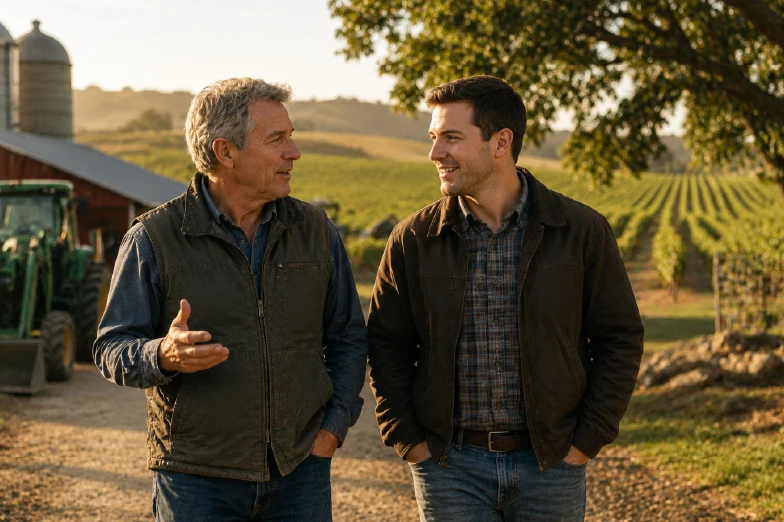
With the farm in an entity, the annual gift exclusion becomes a quiet, powerful transition engine.
For 2026, you can give $19,000 per recipient per year , $38,000 per recipient for a married couple splitting gifts , with no gift tax and no erosion of your lifetime exemption, and no gift tax return required. Applied to entity interests, that means two parents can transfer $38,000 of farm value to each child (and each in-law, and each grandchild) *every year*, indefinitely. They can give disproportionately, if desired. Over a decade, across several recipients, that moves a substantial share of the farm to the next generation entirely tax-free.
When you want to move more, faster, you dip into the $15 million lifetime exemption, which for most families is more than ample. Larger gifts above the annual exclusion simply require a gift tax return to track the exemption amount used, they’re reportable, not necessarily taxable. The strategy is straightforward: use annual exclusion gifts as the steady baseline, and lifetime-exemption gifts for larger moves, all in entity units so control and economics can be split. This is how a farm changes hands gradually, on the founders’ terms, without a tax bill.
A Deeper Look: Fairness, Basis, and the Buy-Sell
The technical decisions in a transition all orbit three tensions worth understanding before you commit.
Fairness between farming and non-farming heirs. A clean solution many families use: transfer the *farm operation and land* to the child who farms (via the entity), and provide for non-farming children through other assets , life insurance, off-farm investments, or a note. Life insurance is especially useful because it creates liquidity out of thin air, letting you equalize among children without carving up the farm. The point is to be *intentional* about fairness rather than defaulting to an equal split that breaks the farm.
Gift basis vs. inherited basis. Here’s the trade-off that cuts against aggressive lifetime gifting. Gifted entity interests carry your original (often very low) basis to the recipient , so if they sell, they owe capital gains on all the appreciation. Assets inherited at death get a stepped-up basis to fair market value, erasing that gain. Because some farm estates now sit under the $15 million exemption, there’s often no estate-tax reason to gift, and holding appreciated land until death to capture the step-up saves the next generation real capital gains tax. The sweet spot for many families: gift enough to transition control and involvement, but leave the highly appreciated land to pass at death.
The buy-sell agreement. Whatever you decide, a buy-sell locks it in, setting what happens to an owner’s interest on death, divorce, disability, or a desire to exit, and at what price or value. It’s the safeguard that keeps a divorce or a falling-out from forcing the sale of the farm. Skip it, and one bad event can unravel everything.
Practical Tips for Bringing In the Next Generation
- Have the family conversation first. Decide who farms, who manages, who’s provided for, and what the founders need , before any documents are drafted.
- Put the farm in an entity. An LLC or family partnership turns the farm into giftable, transferable units and lets you separate ownership from control.
- Use annual exclusion gifts as your baseline. Move $19,000 (or $38,000 per couple) of entity interests per recipient each year, tax-free and without touching your lifetime exemption.
- Keep control until you’re ready. Gift non-voting economic interests while retaining voting/managing interests, so you steer the farm through the transition.
- Weigh gifting against the basis step-up. For appreciated land, holding until death often beats gifting, because heirs get a stepped-up basis. Gift for transition; let the big land pass at death.
- Equalize non-farming heirs deliberately. Use life insurance or off-farm assets so the child who farms gets the farm without shortchanging siblings.
- Put a buy-sell agreement in place. Define what happens on death, divorce, disability, or exit, so no single event can force a sale.
Conclusion
Bringing the next generation into the family farm is a transition, not a transaction, and the families who do it well start early, talk openly, and use the tools deliberately. Put the farm in an entity, move ownership steadily with annual gifts, keep control until the next generation is ready, and be intentional about fairness between the children who farm and those who don’t. With a permanent $15 million exemption and no California estate tax, the tax pressure is low enough that you can design the transition around your family rather than around the IRS.
The one thing that can’t wait is beginning. Work with an agricultural estate and CPA tax specialist to map the transition while everyone’s at the table and able to shape it , a farm handed down on purpose stays in the family; one left to chance usually doesn’t.
Frequently Asked Questions
Q: How do I transfer my family farm to the next generation?
A: The most effective approach is to place the farm in an entity like an LLC or family limited partnership, then transfer ownership gradually using annual gift exclusion gifts of entity interests, dipping into the lifetime exemption for larger moves. This lets you shift ownership steadily while keeping control until the next generation is ready.
Q: How much of the farm and other assets can I gift tax-free each year?
A: For 2026, you can gift $19,000 per recipient per year , or $38,000 per recipient for a married couple splitting gifts , with no gift tax and without using your $15 million lifetime exemption. Applied to farm entity interests, this moves substantial value to children and grandchildren over time, completely tax-free.
Q: Should I gift farmland or leave it to my heirs at death?
A: For most farm families under the $15 million exemption, leaving appreciated land to pass at death is better because heirs receive a stepped-up basis to fair market value, erasing capital gains. Gifting passes your low original basis. A common strategy gifts entity interests for transition while leaving the highly appreciated land to inherit.
Q: How do I treat farming and non-farming children fairly?
A: Many families transfer the farm operation and land to the child who farms, then provide for non-farming children with other assets like life insurance or off-farm investments. Life insurance creates liquidity to equalize without dividing the farm. The key is being intentional about who gets what rather than defaulting to an equal split that can break the farm. There are ways and methods to take care of the non-farm heirs while incenting the on farm hers to continue the business.
Q: Why use an LLC to transfer a family farm?
A: An LLC turns the farm into transferable membership interests that are easy to gift in small annual increments, and it lets you separate ownership from management, so you can keep control while gifting economic interests. It also houses the operating business and supports a buy-sell agreement to prevent forced sales.
Q: What is a farm buy-sell agreement?
A: A buy-sell agreement is a contract among the farm’s owners that sets what happens to an owner’s interest upon any one of these life changing events: death, divorce, disability, or a desire to exit , including who can buy it and at what price or what valuation method. You may require that the farm and all of its assets remain within the blood-line. For a family farm, it’s the safeguard that prevents a single event from forcing the unexpected sale of the land, business or related assets.